Interior Design up the Valley
Interior Design in Corbridge and the Tyne Valley
A village built in stone, and the whole home we finished there.
Corbridge sits in the Tyne valley, ranged along the northern bank of the river, some five kilometres east of Hexham and thirty five west of Newcastle. It is the successor to the Roman town of Corstopitum, part of the tower of St Andrew’s church has stood since Saxon times, and the streets still twist and narrow around a Market Place that probably follows the shape of the village that was here before the Conquest.
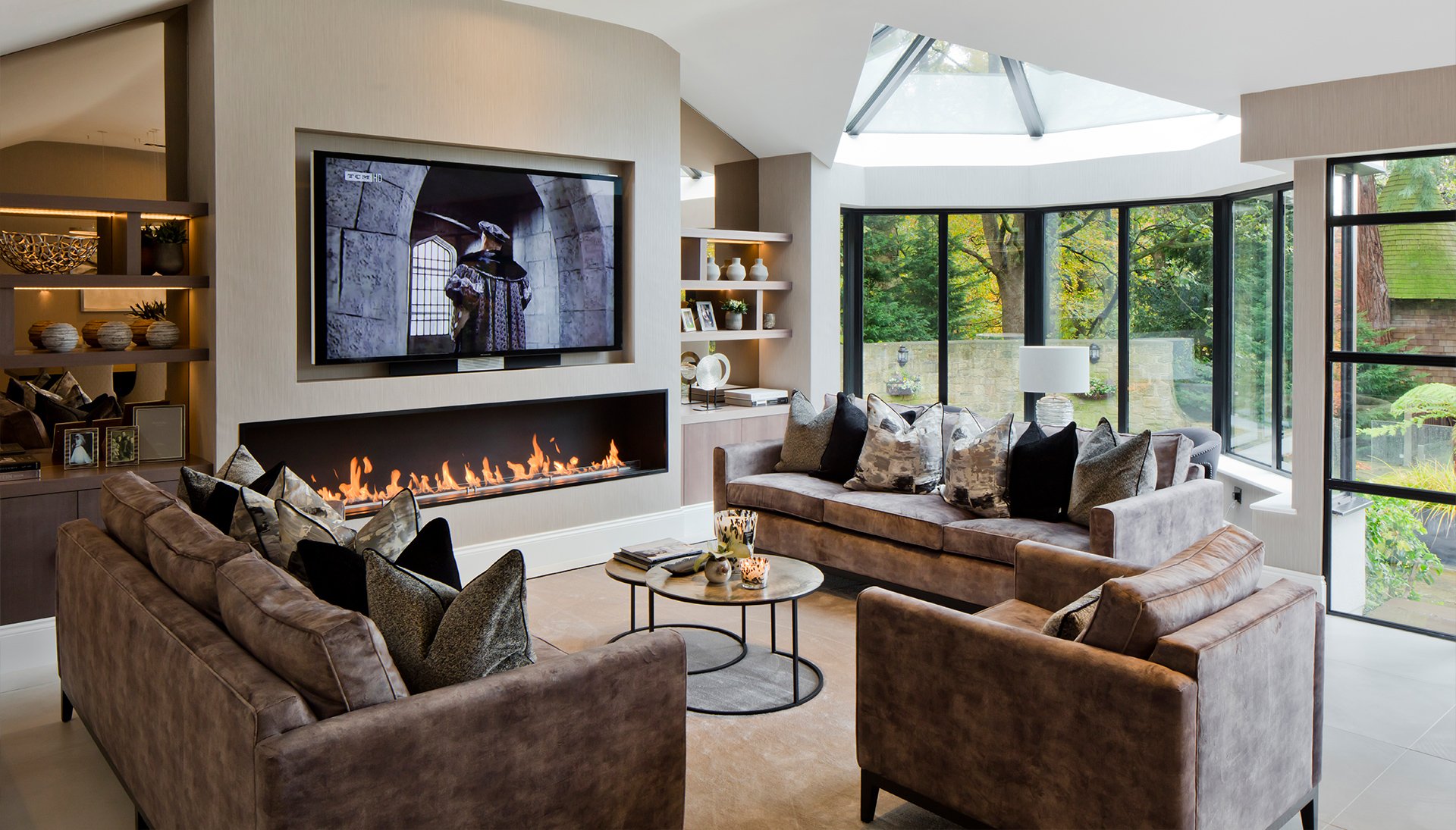
Aubury & Co is a short drive away in Ponteland, where the studio has been since 2005. The Northumberland Project, a whole home in Corbridge taken from plans to finished rooms, is one of the projects we can show you in full.
This page is for anyone with a stone house in the valley who is thinking about the rooms inside it: what the village is made of, what that asks of a room, and how we work when a project is up the valley.
A Village Built in Stone
Drawn from the conservation area appraisal the council holds for Corbridge, and from Historic England’s list entry for the Vicar’s Pele.
Corbridge Conservation Area was designated in March 1974 and revised in March 1996. The appraisal describes a core of eighteenth, nineteenth and twentieth century buildings, interspersed with earlier properties from the fourteenth to the seventeenth centuries, wrapped around a medieval street pattern that rises up the side of the valley from the bridge. The bridge itself dates from 1674 and was the only one on the Tyne to withstand the floods of 1771.
Stone and slate dominate. In the appraisal’s words, pitched roofs, chimney stacks and pots create “simple and robust architecture and an attractive silhouette”, and the tower of St Andrew’s peering over the river terraces is the defining view of the village.
The Vicar’s Pele
East of the church stands the Vicar’s Pele, listed at Grade I and described by Historic England as the best preserved vicar’s pele in the county: a tower house of about 1400, built of large squared stones, mostly re-used Roman material, under a stone slate roof, and the vicarage until the early seventeenth century. What we like most in the list entry is a domestic detail. The first floor has window seats on its north and south sides. Six hundred years on, the instinct to sit in the window is unchanged.
What the houses are made of
- Walls. A local cream sandstone that tints grey with age, used rough, rock-faced and tooled, with ashlar surrounds to windows and doors and at the quoins. Brick on later buildings is often buff or pale yellow to mimic the tone of stone.
- Roofs. Predominantly Welsh slate, with some of the oldest properties still under split stone flags, and clay pantiles elsewhere. Chimney pots come in shapes from Bishops and Captains to Beehives, and the appraisal counts them as vital to the village’s character.
- Joinery. Windows, shutters and doors are timber and invariably painted, and original joinery generally survives.
- Reveals. The appraisal notes that replacement windows set flush with the wall, rather than back into a reveal, lose the building its depth and shadow. It is a point about the outside, but it matters inside too.
Sources: Corbridge Conservation Area Character Appraisal (Tynedale Council, 2009, held by Northumberland County Council, PDF); Vicars Pele, list entry 1044750 (Historic England).
What a Stone House Asks of Its Rooms
Plain observations from working in the valley. Not rules, and every house is different.
Thick walls give deep window reveals, and that reveal is where the decision about curtains or blinds begins. A Roman blind fitted inside it keeps the stone sill and the depth of the wall on show. Full-length curtains hung outside it make the window read taller and the room softer. Often the answer is both, with the cloth chosen alongside everything else in the room so the scheme reads as one idea.
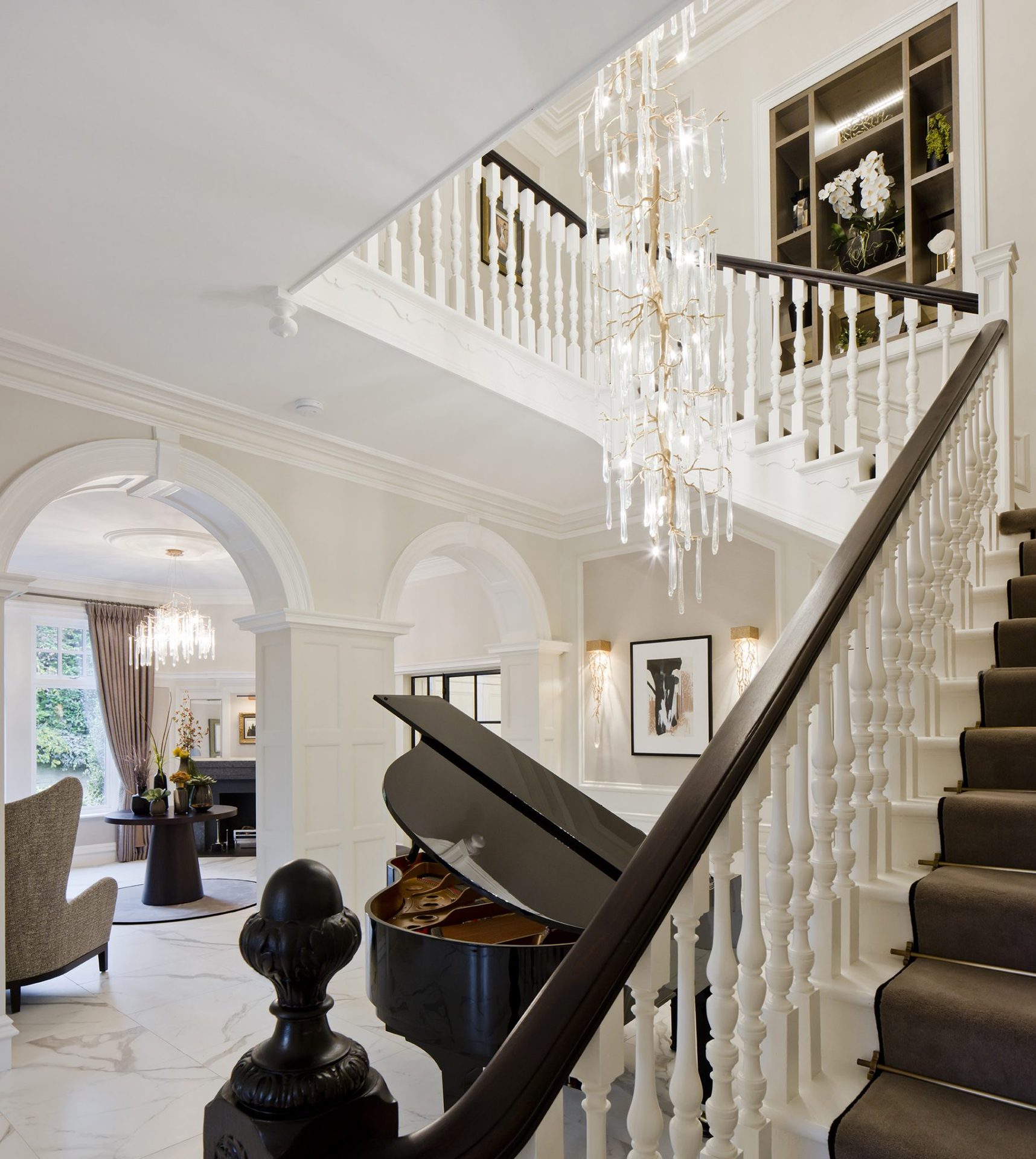
Stone floors and high ceilings carry sound and hold cold, so textiles do more work than in a newer house. At The Northumberland Project the piano lounge kept its stone floors and high ceilings and was left calm enough for a grand piano to breathe. Lighting in an old house is noticed twice, once when the room is lit and again when you see that the fitting belongs to the architecture. In Corbridge a clear pendant, faceted like cut stone, was specified as permanent decoration. Not a feature, a foundation.
If the house is listed
Historic England is clear that listing covers the entire building, so works that might affect its character need listed building consent, and that can include replacing windows and internal alterations. As we read it, redecorating and furnishing are not the kind of change the consent is aimed at, and that is where most of our work sits. On a listed house we would always check with the conservation officer before anyone touched joinery, fireplaces or plasterwork, and we work alongside architects and builders so the question is asked early. Conservation area status, for its part, concerns the character and appearance of the area as a whole, and the appraisal is a good first read for anyone planning changes.
Sources: What Are Listed Buildings? (Historic England); Corbridge Conservation Area Character Appraisal (Tynedale Council, 2009, held by Northumberland County Council, PDF); the Northumberland Project page on this site.
How We Work up the Valley
The studio has been in Ponteland since 2005, trading for many years as Aubury Interiors: the same team, the same founder and the same telephone number today. Cheryl founded the studio and still designs with us. Lauren, Inchbald trained, is Partner and Principal Designer.
Cheryl led The Northumberland Project from the earliest planning conversations through to final styling, alongside architects and builders. Our own workroom in Ponteland produced the drapery, headboards, cushions and bespoke furniture that held the scheme together.
- Whole homes, single rooms and consultations, see our Services
- Studio visits by appointment, in Ponteland, Northumberland NE20
- Curtains, blinds, headboards and soft furnishings from our own workroom in Ponteland
Made in Ponteland, Fitted in the Valley
Curtains and Blinds
Made to measure for each window, with the cloth chosen alongside the rest of the room. Full-length curtains, Roman blinds and pelmets, sized to deep stone reveals.
Headboards
Upholstered and framed headboards made to the bed. The wenge framed headboard at The Northumberland Project, upholstered in velvet with fine thread detail, was built in house.
Cushions and Upholstery
The smaller pieces that settle a room, cut from the same cloth so the scheme reads as one idea from the bedroom to the games room.
Projects Nearby
The Northumberland Project is in Corbridge itself. The other two are the nearest projects we can show you in full, on the coast and in Gosforth, and the photographs on this page come from Corbridge.
The Northumberland Project
A family home in Corbridge, set into the quiet of the Northumberland countryside.
Bamburgh
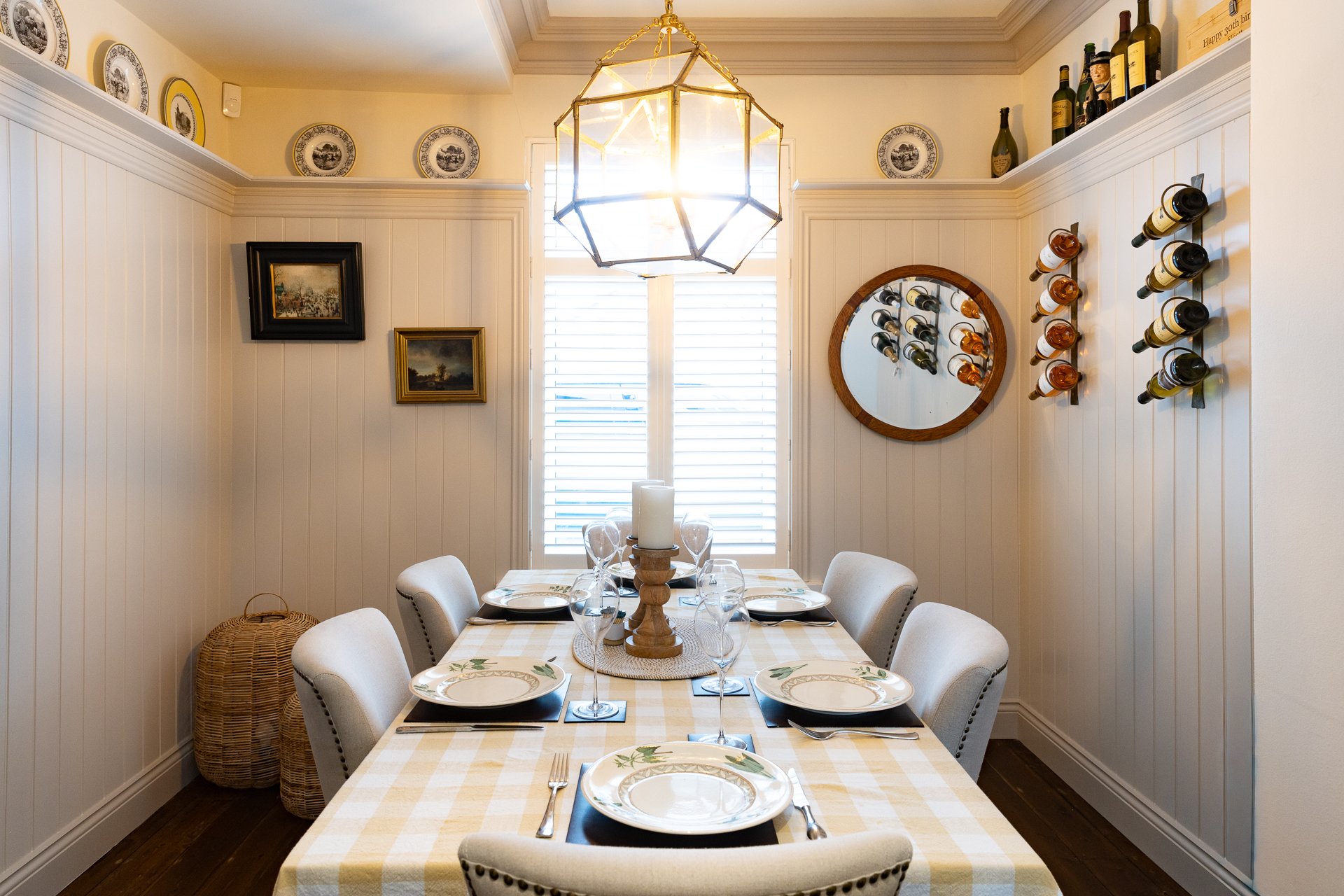
A coastal cottage brought in from the wind, held in warmth and layered texture.
Montagu
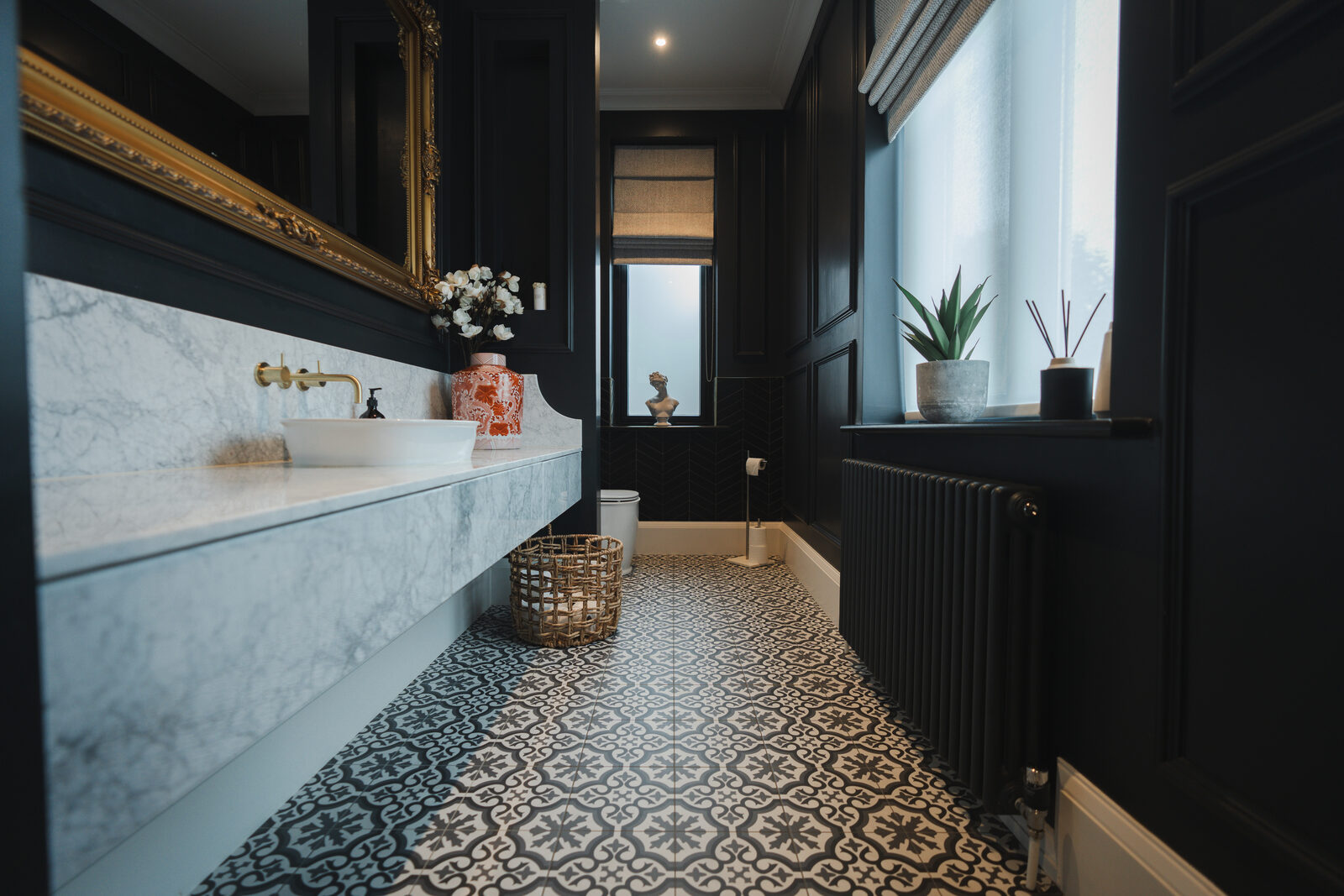
A whole-house project led by Lauren Reece, taken from first sketch to the afternoon the shelves were dressed.
Common Questions
Do you work in Hexham and the villages around Corbridge?
Yes. We are based in Ponteland and work across Ponteland, Darras Hall, Corbridge, Newcastle upon Tyne and the wider North East. If you are further up the valley, ask. We are always happy to talk it through.
Our house is in the conservation area. Does that change what we can do inside?
Conservation area status is about the character and appearance of the area, and the council’s appraisal is the place to read what that means for Corbridge. If the house is also listed, consent covers the whole building, so joinery, fireplaces and plasterwork should be checked with the conservation officer first. Paint, cloth and furniture are where most of our work sits. That is their guidance, not ours, and we would always defer to it.
Can you make curtains and blinds for old windows?
Yes. Everything from the workroom is made to measure for each window, so an uneven reveal or a tall sash is simply part of the measurement. Read more on our curtains and blinds page, or get in touch and we will come and look.
Sources: Corbridge Conservation Area Character Appraisal (Tynedale Council, 2009, held by Northumberland County Council, PDF); Vicars Pele, list entry 1044750 (Historic England); What Are Listed Buildings? (Historic England).
A Conversation, up the Valley
Ring us on 01661 871901, email [email protected] or send a note through the form. Tell us a little about your home and what you are hoping for, and we will arrange a proper conversation.
Get in Touch