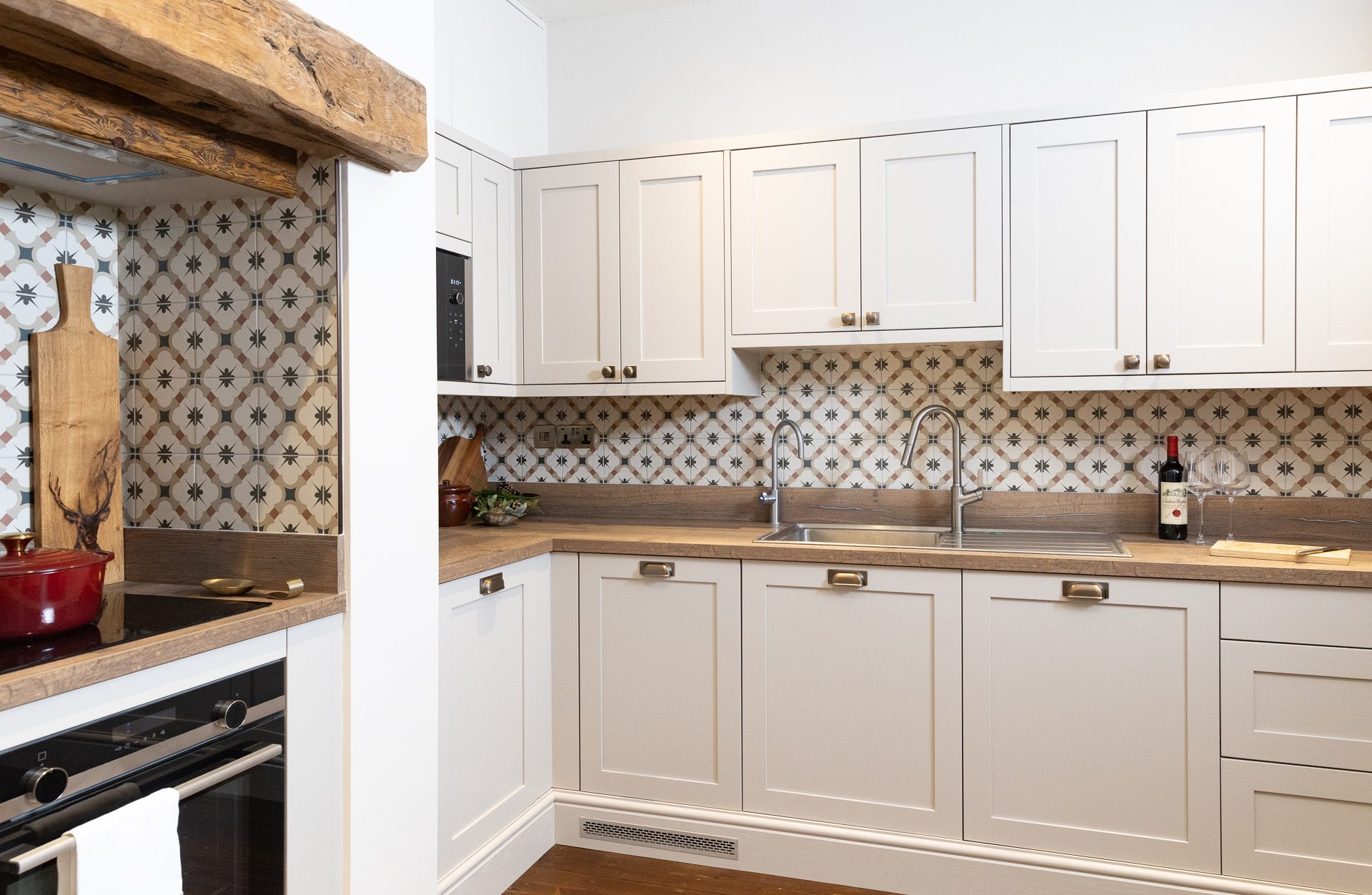
A good many of the houses we are asked into are older than the paint on their walls by a century or more. Stone farmhouses, Victorian villas, cottages on the coast. They were built in a different way from a modern house, and the difference matters most at the moment an interior designer arrives: when someone wants to decorate.
Old walls work differently
A modern house keeps water out with barriers: a damp-proof course, a cavity, a membrane, a plastic paint. An older house of traditional construction does not have those barriers and was never meant to. Historic England puts it plainly: buildings of traditional construction were made with natural materials that manage moisture by absorbing and releasing it slowly. A solid stone wall takes in a little damp when it rains and lets it out again when the weather turns, through the mortar, the plaster and the surface finish. The wall is fine so long as nothing stops that cycle.
Cover it with something that does not let moisture through, and the cycle stops. Historic England's advice is that using modern materials on a traditionally built house can cause more damage by trapping moisture and reducing permeability. In practice that means damp behind a new coat of vinyl emulsion, plaster that blows off a wall two winters after it was skimmed, and paint that peels however often it is redone. The wall is not failing. It is being suffocated.
Where lime comes in
Lime was the binder in nearly every old building in Britain before the middle of the nineteenth century: the mortar between the stones, the plaster on the walls and the wash on top. The Society for the Protection of Ancient Buildings, the SPAB, describes lime as letting a structure breathe and move gently, two things an old house needs to do, and notes that it is also what gives those buildings their characteristic soft texture.
There are two broad families. Non-hydraulic lime, made from purer limestone, hardens slowly by taking carbon dioxide back out of the air, and its slow set and workability make it the traditional choice for internal plasterwork. Natural hydraulic lime, graded NHL 2, 3.5 and 5, sets harder and faster and is used where a wall is more exposed. The rule the SPAB gives is a simple one: the stronger the lime, the less it breathes and the less it flexes, so the job is to strike the right balance for the wall in front of you. Portland cement, gypsum plaster and plastic paints are the materials the SPAB names as capable of seriously harming old fabric.
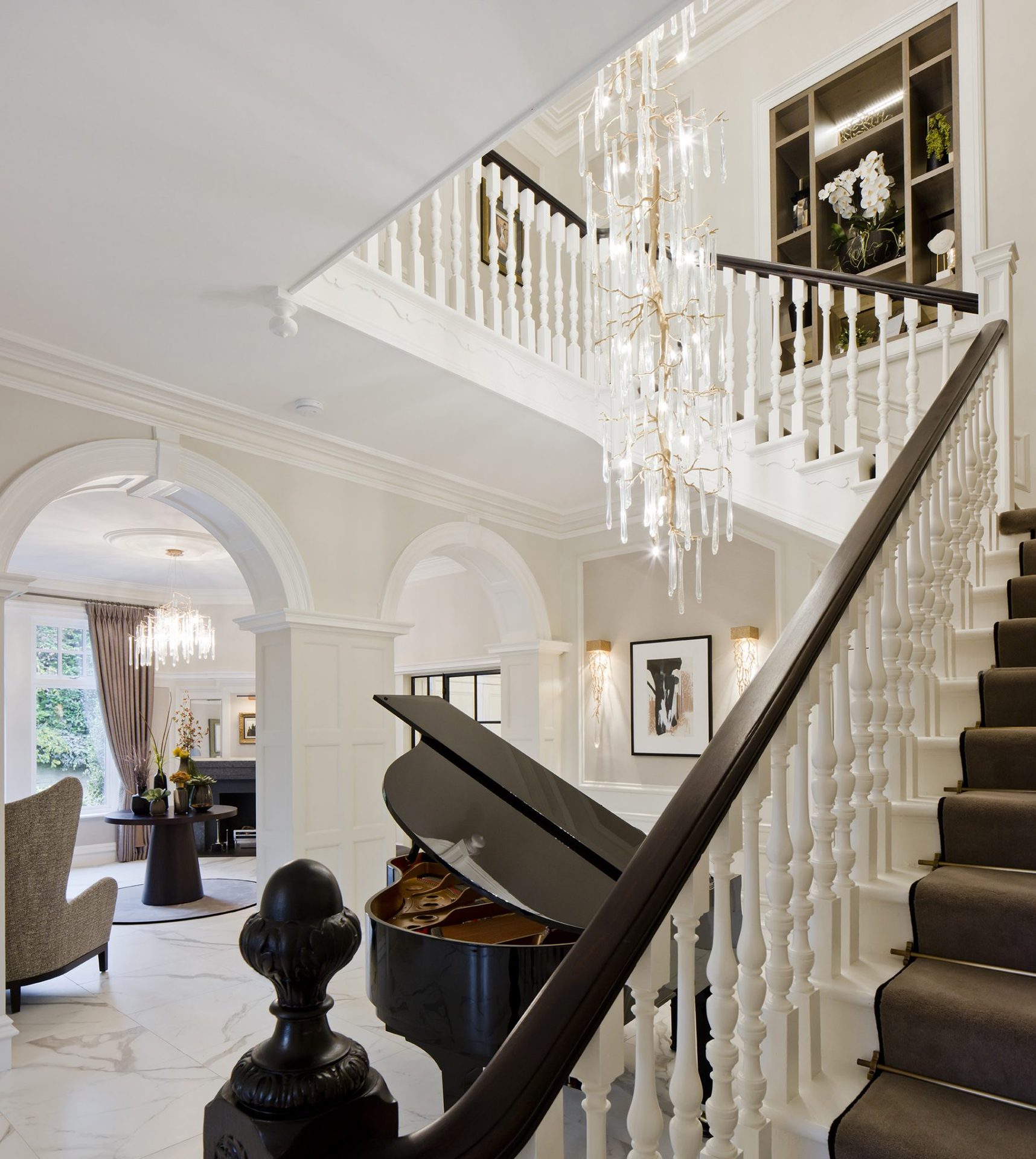
What this means for decorating
For most of our clients the question is not the mortar but what goes on the wall in the rooms they live in. A few things we have learned to ask about.
- Limewash. The simplest breathable finish there is, made from lime and water with earth pigments for colour. The SPAB calls it considerably more breathable than most modern paints. It goes on thin, in three or four coats, over a dampened surface, and it dries several shades lighter than it goes on, so a trial patch is essential. It suits lime plaster, lime render and old limewash, not plasterboard, cement render or a wall already painted in emulsion, and the SPAB specifically advises against limewashing bare sandstone for the first time, worth knowing in a county with so many sandstone houses. It needs renewing every few years and will never give a flat, uniform colour, which is rather the point of it.
- Distemper and clay paints. Soft distemper was for centuries the usual finish on internal plaster, and it still has one clear advantage: it does not clog the detail on a decorative cornice or ceiling rose the way layer upon layer of emulsion does. Clay-based paints, the SPAB notes, are useful for unifying patchy old plaster and can sometimes go over a less breathable finish where stripping is not an option.
- Mineral paints. Several manufacturers now make mineral-based paints for breathable walls, in a wider range of colours than limewash offers. Ask a specialist, and ask the manufacturer for evidence, since breathability varies between products and a claim on a tin is not the same as a test.
- What to leave alone. Sound old paint is generally better painted over than stripped. Historic England's advice is that stripping paint or lime plaster can take away layers of a house's history that cannot be replaced, and the SPAB adds that stripping softwood joinery indoors is rarely appropriate. If a wall has been painted before, find out what with, before deciding what goes on next.
- Paint type as well as colour. The SPAB's advice on paint is that the type and the gloss level matter as much as the shade, and that brilliant white gloss is often less appropriate in an old house than a semi-gloss off-white. Historic England makes the same point about the outside of a house: modern whites are brighter and colder than the whites these buildings were built with.
Where we sit in all this
We are interior designers, not conservators or building surveyors, and the honest answer to "what is my wall made of and what will it take" is that a specialist needs to look at it. That might be a surveyor or architect with old-building experience, a builder who works in lime, or the SPAB's own technical advice line. Historic England's guidance for owners says the same, and if the house is listed, the local planning authority's conservation officer should be part of the conversation before anything is specified. We have written about that side of it separately: listed and period homes in Northumberland.
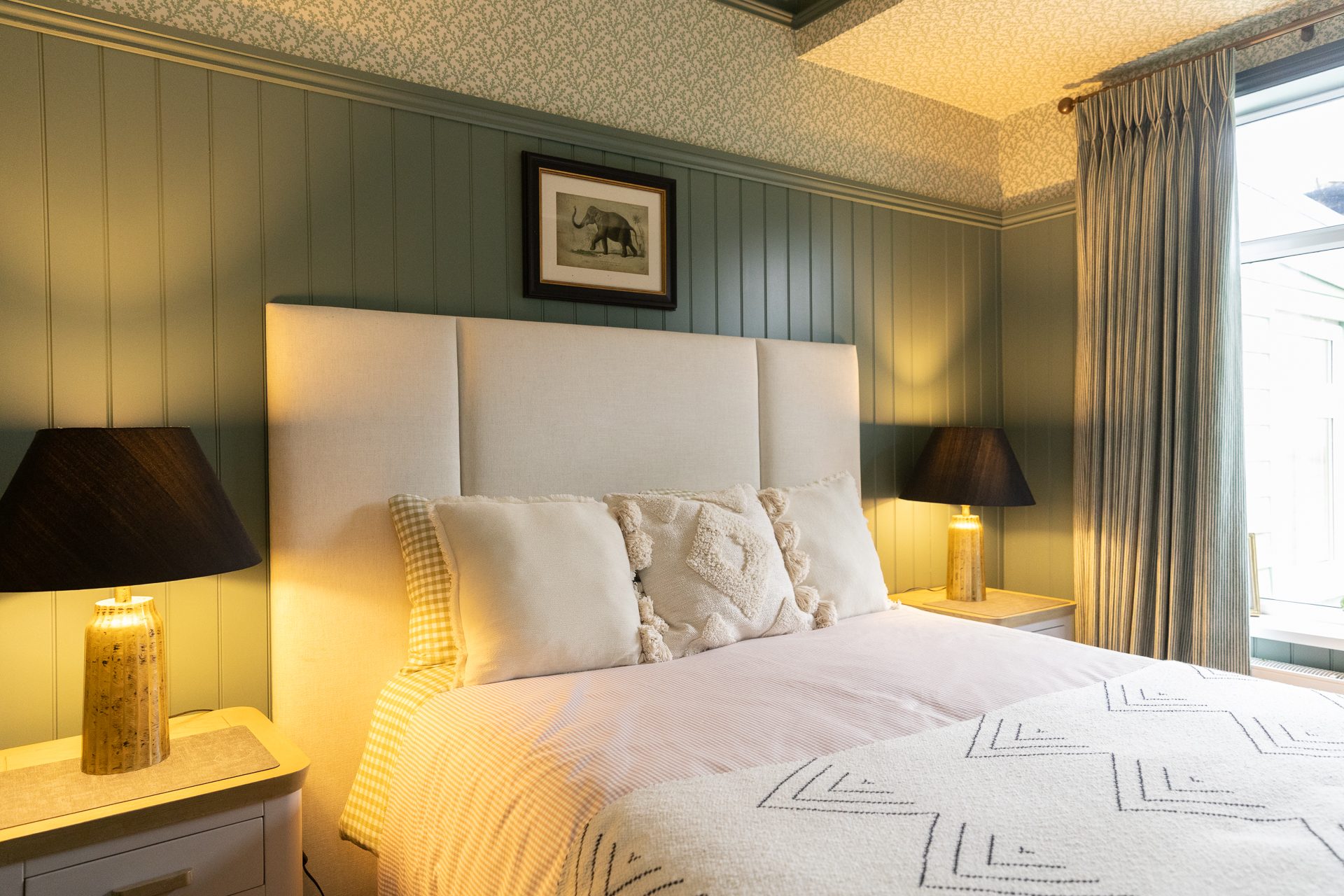
What we do is design the room so the right answer is not a compromise. A limewashed wall in a soft earth colour, a curtain in a heavy weave, a headboard made in our own workroom, brass that will darken with the years: these belong together, and an older house tends to look more like itself when its finishes are the ones it was built for. On the projects on this site, from the Victorian proportions of Elmfield Road to a period house in Corbridge and a cottage on the coast at Bamburgh, the houses were allowed to lead. Getting the walls right is where that starts.
This is general guidance, not building advice for your house. Older buildings vary, and anything involving structure, damp or a listed building should be checked with a qualified specialist and, where relevant, the local planning authority.